Where is the rain when the flowers bloom
2022
Video 5min, old beehives, hives, beeswax, beekeeping tools, etc.
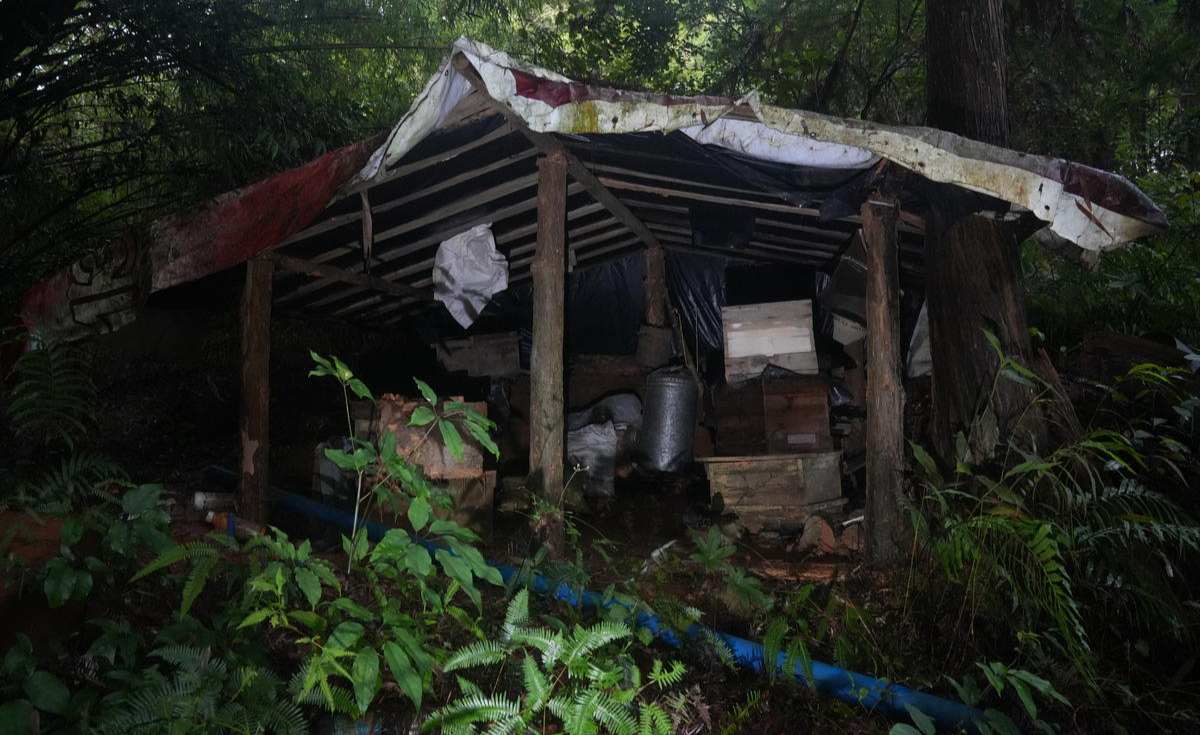
Some beekeepers travel from region to region each year with their hives and daily tools, following the flowering seasons of different plants so their bees can gather nectar. It is a nomadic form of labor shaped by roads, seasons, and blooming cycles. In a remote mountainous area of Guangdong, China, I came across a beekeeper’s tent. I was told that the beekeeper had died there in an accident two years earlier. Yet inside the old hives, a small number of bees had continued to survive and reproduce.
As the COVID-19 pandemic persisted for several years, transportation controls and restrictions on cross-regional movement severely affected the migration routes of independent beekeepers, making this livelihood—already dependent on constant mobility—even more fragile. At the same time, climate change, deadly fungi, and parasites have further increased the risk of bee mortality.
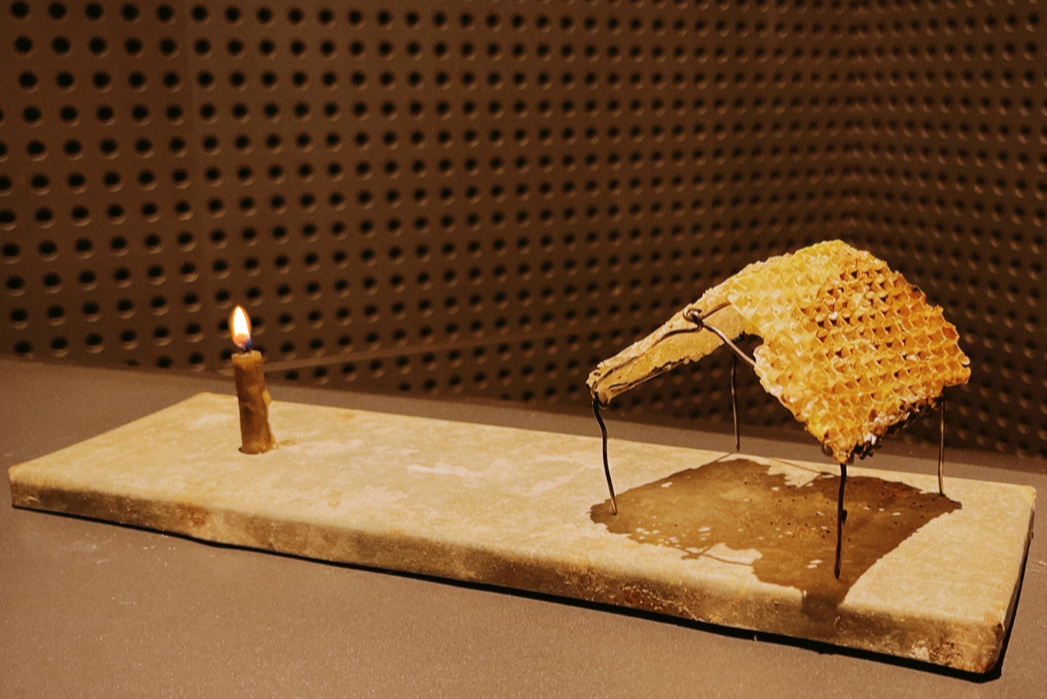
From the neglected hives, I collected damaged honeycombs and beeswax, and took several beekeeping tools from the tent. Using these materials, I made a small shelter and a candle. I imagined the shelter offering protection from wind and rain for both humans and bees, while the candle might provide more than light and warmth alone.
今岁花期消息定,只愁风雨无凭准
2022
录像 5min,旧蜂箱,蜂巢,蜂蜡,养蜂用具等
一些养蜂人采用转地养蜂的方式,携带蜂箱和生活用品,依照各地蜜源植物的花期不断迁移。我在乐明村偏远的山林中发现了一顶养蜂人的帐篷。养蜂人两年前在此意外去世,他留下的蜂箱中仍有少量蜜蜂存活并繁衍。由于长期无人照料,蜂群的生存状况并不理想。疫情期间,个体养蜂人的生计更加困难;与此同时,近年来的气候变化与致病性真菌也使蜂群面临更高的死亡风险。
我从这些旧蜂箱中采集残损的蜂巢与蜂蜡,制作了一座小棚屋和一支蜡烛。棚屋被设想为人和蜜蜂共同的庇护所;蜡烛燃烧时,蜂蜡再次转化为光与热。两件物体保留着养蜂人与蜂群共同生活的痕迹。